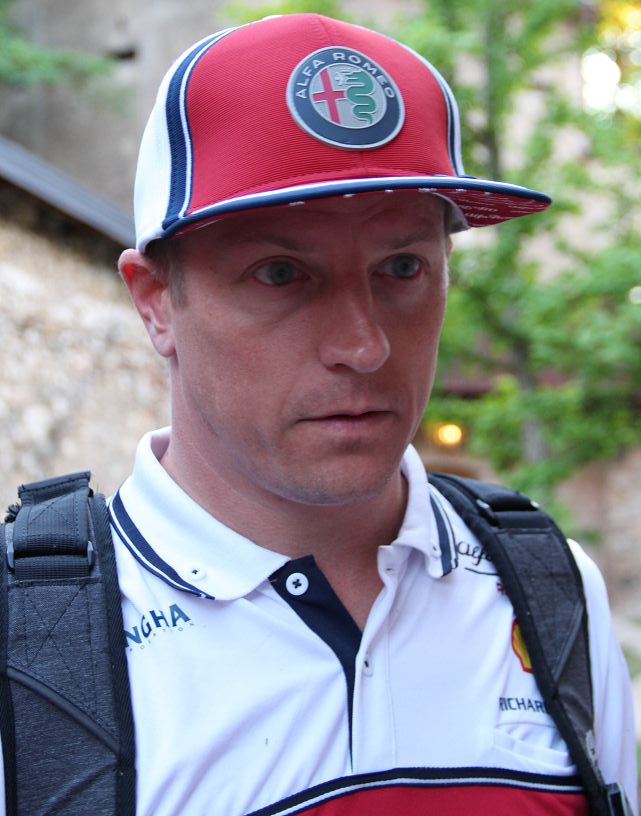
Kimi Raikkonen: The Iceman's Unforgettable Journey to F1 Glory
In the annals of Formula 1, few names evoke a sense of enigmatic charm and raw speed quite like Kimi Raikkonen. Dubbed "The Iceman" for his remarkably calm demeanor and succinct radio communications, the Finnish driver carved out a legendary career spanning two decades. While his entire journey is a testament to perseverance and unwavering talent, it was the 2007 season that forever etched his name into motorsport history, as Kimi Raikkonen F1 defied the odds to clinch the coveted World Championship title.
From Finnish Kart Tracks to F1's Doorstep: Kimi Raikkonen's Early Grit
Humble Beginnings and Financial Hurdles
Born on October 17, 1979, in Espoo, Finland, Kimi Raikkonen's motorsport odyssey began in karting at the tender age of eight. His natural aptitude for speed was evident, leading to numerous successes in Finnish karting series and eventually international competitions. Yet, like many aspiring talents, financial constraints proved to be a significant barrier.
His initial foray into car racing in 1999 was brief and disheartening. After a handful of starts in the British Formula Renault series, Raikkonen found his Mygale chassis woefully uncompetitive and, frustrated, returned to karting. However, his ambition refused to be quelled. He reappeared later that year to compete in the prestigious Formula Ford Festival, a proving ground for future stars, and then emphatically won the Formula Renault Winter Series.
This success laid the groundwork for a return to Formula Renault with top team Manor. Team boss John Booth vividly recalled the challenges: "Kimi had stayed in karts a long time, mainly because he couldn’t raise the money to get out of it until the Robertsons got involved." This pivotal moment marked the entry of Dave and Steve Robertson, a father-and-son management duo who would play a crucial role in shaping Kimi's Kimi Raikkonen's F1 Legacy: From Funding Woes to World Champion. With their backing, Raikkonen dominated the 2000 Formula Renault season, winning seven of ten races and clinching the title with two races to spare.
Defying the Odds: The Sauber Breakthrough
Raikkonen's meteoric rise from national karting to international junior formula champion in just a few years was unprecedented. It was this raw, untamed speed that caught the attention of David Robertson, who in 2000, made a fateful call to F1 team owner Peter Sauber. Robertson raved about his young protégé, convincing Sauber to offer Raikkonen a three-day test at Mugello.
The leap to a full-blown Formula One car was immense. Raikkonen struggled physically, only able to manage four flying laps at a time due to the extreme G-forces and demands of the machine. However, Sauber saw past the initial physical limitations. What truly mattered was speed, and Kimi possessed that in abundance.
Sauber made the bold decision to sign Kimi for the 2001 F1 season, a move that stirred considerable controversy. Helmut Marko, representing Red Bull, a major sponsor, lobbied intensely for his preferred driver, Enrique Bernoldi. Despite Marko's complaints to Red Bull chief Dietrich Mateschitz and insinuations of an unfair test – which Sauber vehemently refuted – Raikkonen secured the seat.
The challenges didn't end there. The FIA, F1's governing body, raised its own objections. With just 23 car races in lower-powered machinery to his name, 21-year-old Kimi's suitability as an F1 driver was questioned by then-president Max Mosley. At a vote of the Formula One Commission, Sauber found strong allies in Bernie Ecclestone and the bosses of Ferrari, Williams, McLaren, and Renault. Mosley abstained, and Kimi Raikkonen got his chance, albeit starting the year with a provisional license. This remarkable entry into the sport underscores just how unique Kimi Raikkonen's F1 journey truly was, demonstrating How Kimi Raikkonen Defied FIA & Red Bull to Start F1 against formidable opposition.
The McLaren Years: A Champion in Waiting
Kimi Raikkonen's F1 debut with Sauber in 2001 was nothing short of impressive, scoring a point in his very first race. His talent quickly caught the eye of McLaren team principal Ron Dennis, who signed him to replace fellow Finn and two-time World Champion Mika Häkkinen for the 2002 season. At McLaren, Raikkonen established himself as a formidable force, consistently challenging for the championship.
He finished a close second in the 2003 Drivers' Championship, narrowly missing out to the legendary Michael Schumacher. Two years later, in 2005, he again ended the season as runner-up, this time behind Fernando Alonso. While Kimi's speed and racecraft were undeniable, his tenure at McLaren was plagued by persistent issues of car reliability. Breakdowns and technical malfunctions often robbed him of potential victories and crucial championship points, creating a deep-seated frustration for a driver clearly capable of winning titles.
Despite these setbacks, Raikkonen’s performances solidified his reputation as one of F1’s quickest drivers, always pushing the limits. His calm demeanor during moments of extreme pressure, even when his car failed him, only reinforced his "Iceman" moniker. Yet, the longing for a championship-winning machine grew, ultimately setting the stage for a monumental move.
2007: The Year Kimi Raikkonen Conquered F1 with Ferrari
A Dream Debut for the Scuderia
The 2007 season marked a dramatic turning point in Kimi Raikkonen's F1 career. Frustrated by McLaren's reliability, he made the bold decision to join Ferrari, filling the vacant seat left by the retiring Michael Schumacher. In a move that sent ripples through the paddock, Raikkonen stepped into the legendary red overalls, a team synonymous with champions.
His debut with Ferrari was spectacular: a pole position, fastest lap, and victory at the opening Australian Grand Prix. It was a clear statement of intent. However, the 2007 season soon developed into one of the most thrilling and unpredictable in F1 history. The championship battle was a three-way slugfest involving Raikkonen and the two McLaren drivers, reigning champion Fernando Alonso and rookie sensation Lewis Hamilton. The internal rivalry at McLaren, coupled with Ferrari's strategic prowess, created an intoxicating atmosphere.
Going into the final race in Brazil, all three drivers had a mathematical chance of winning the title. Hamilton led the standings with 107 points, followed by Alonso on 103, and Raikkonen a distant third with 100 points. The odds were heavily stacked against the Finn. Yet, in a masterclass of composure and opportunism, Raikkonen delivered a flawless performance, winning the Brazilian Grand Prix. A series of dramatic events, including a gearbox issue for Hamilton and a lack of pace from Alonso, meant Kimi's victory propelled him to an astonishing championship triumph by a single point. He became one of F1's youngest world champions at the time and, more significantly, sealed the title in his very first season with Ferrari.
The Iceman Persona: A Competitive Advantage?
Kimi Raikkonen’s "Iceman" nickname isn't just a catchy moniker; it profoundly defines his approach to racing. His cool, unflappable nature, even in the most high-stakes scenarios like the 2007 title decider, often gave him a mental edge. While other drivers might succumb to pressure, Kimi remained singularly focused on extracting maximum performance from his car.
His infamous radio messages, often brief and to the point (or occasionally sarcastic), became legendary, further cementing his unique persona. This ability to detach from the emotional whirlwind of F1 allowed him to maintain clarity and make critical decisions under duress. For aspiring racing drivers, Raikkonen's career offers a compelling lesson: while passion is essential, maintaining a calm, objective mindset can be a powerful competitive advantage, especially when the stakes are highest.
Kimi Raikkonen's Enduring Legacy in F1
While the 2007 World Championship remains the pinnacle of his achievement, Kimi Raikkonen's F1 career extended far beyond that iconic season. He continued to race with Ferrari, then took a hiatus, only to return to the sport with Lotus, where he famously declared, "Leave me alone, I know what I'm doing!" This quote perfectly encapsulates his independent spirit.
He later returned to Ferrari for a second stint and finished his career with Alfa Romeo, demonstrating incredible longevity and passion for the sport, finally retiring at the end of the 2021 season. With 350 starts, he holds the record for the most Grand Prix starts in F1 history, a testament to his dedication.
Kimi Raikkonen's F1 journey is a captivating narrative of raw talent battling financial hardship, defying established norms to enter F1, enduring reliability woes, and finally seizing his moment of glory against all odds. His unique character, uncompromising speed, and that unforgettable 2007 title triumph ensure that Kimi Raikkonen will forever be remembered as one of Formula 1's most distinctive and beloved champions.