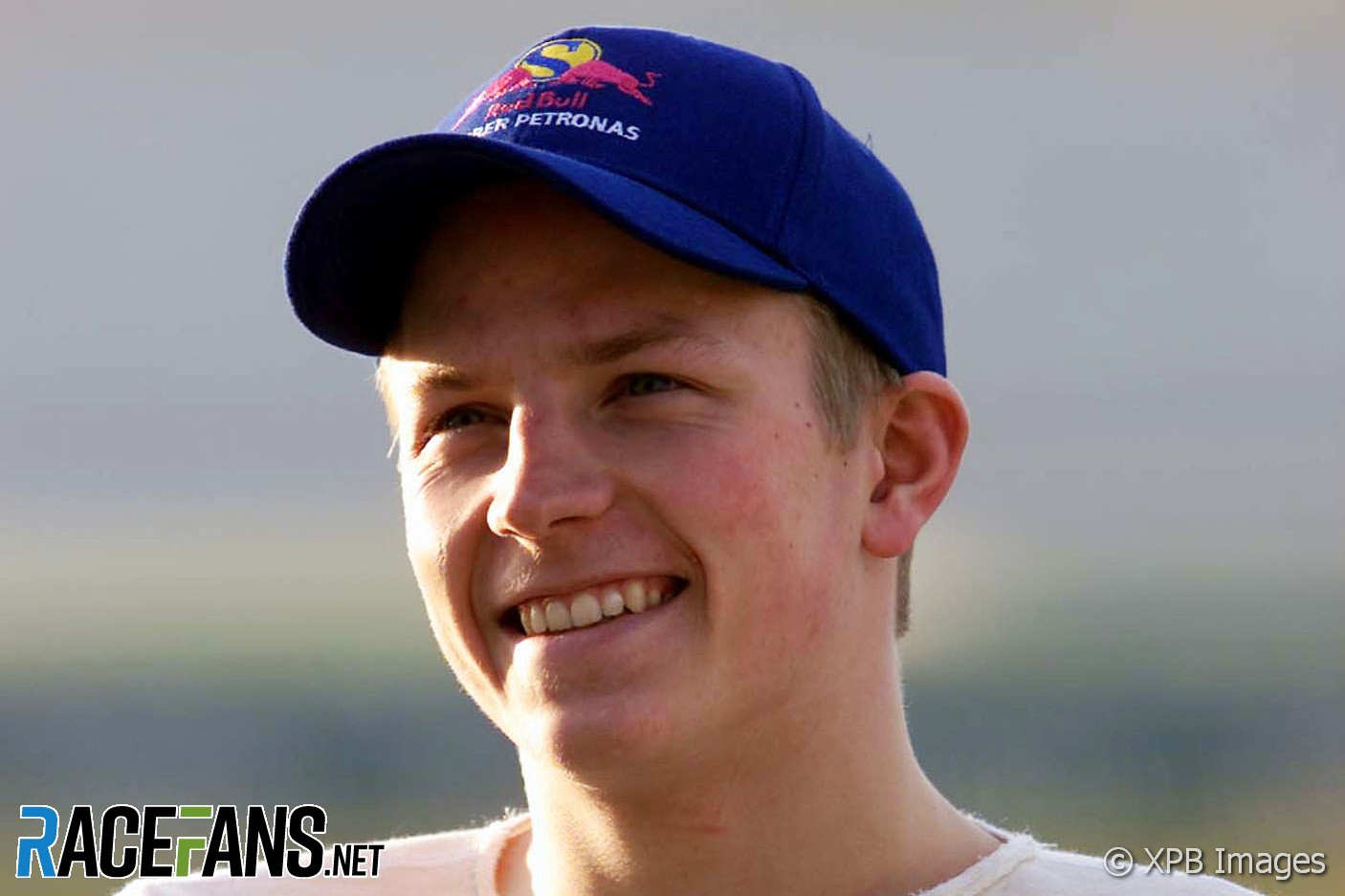
The world of Formula 1 is notoriously difficult to enter, a crucible where only the most exceptional talents, often backed by significant financial might, ever get a shot. Yet, some drivers defy all odds, carving out a path against immense pressure and bureaucratic hurdles. One such legend is Kimi Räikkönen, the enigmatic Finn known as "The Iceman." His journey to a Grand Prix start was not just improbable; it was a testament to raw, undeniable speed that forced the hand of a seasoned team owner and ultimately challenged the very governing body of the sport. This is the incredible story of how Kimi Raikkonen F1 defied both Red Bull and the FIA to make his debut.
From Karting Prodigy to Formula Renault Champion
Born on October 17, 1979, in Espoo, Finland, Kimi Räikkönen's motorsport journey began, like many of his peers, in karting. From 1987, he honed his skills on Finnish tracks, quickly racking up successes before venturing onto the international stage. His transition to car racing, however, was not without its initial setbacks. In 1999, after a handful of starts in the British Formula Renault series, Räikkönen became disillusioned with his uncompetitive Mygale chassis and temporarily retreated to karting. This early hiccup could have derailed a less determined individual, but Kimi's resolve was unwavering.
He soon reappeared, demonstrating his burgeoning talent by competing in the prestigious Formula Ford Festival and then dominating the Formula Renault Winter Series. This resurgence set the stage for a pivotal return to the main Formula Renault championship in 2000 with the top-tier Manor team. As team boss John Booth would later recall, "Kimi had stayed in karts a long time, mainly because he couldn’t raise the money to get out of it until the Robertsons got involved." It was the father-son management duo, Dave and Steve Robertson, who truly catalyzed Räikkönen's career, navigating the financial hurdles that often plague aspiring drivers. That season, Kimi started with a third place and a victory in the first two races, then added six more championship wins, securing the title a remarkable two races before the season's end. His dominance was absolute, but the leap to Formula 1 was still a colossal chasm.
The Mugello Test: Speed That Silenced Doubts
With a Formula Renault title under his belt, the Robertsons knew they had a diamond in the rough. In 2000, David Robertson made a audacious call to Formula 1 team owner Peter Sauber, extolling the virtues of his young Finnish protégé. Sauber, known for his keen eye for talent, was persuaded to offer Räikkönen a three-day test at the Mugello circuit in a full Formula 1 car. The transition was, predictably, immense. Räikkönen, then just 21, struggled physically with the extreme G-forces and demands of an F1 machine, managing only four flying laps at a time before needing a break.
Most observers might have seen this as a red flag, but Peter Sauber saw past the immediate physical limitations. He understood that physical conditioning could be improved with training and time. What truly mattered was raw, unadulterated speed, and Kimi had that in abundance. Sauber recognized an innate talent, a natural feel for the car and the limit, that was far rarer than mere endurance. This bold assessment underscored Sauber's reputation as a talent scout, prioritizing sheer pace over a perfectly polished physical package right out of the gate. It was a gamble, but one Sauber was clearly willing to take based on what he witnessed.
Clashing with Red Bull: A Seat Denied to Bernoldi
Sauber's decision to pursue Räikkönen for the 2001 season was not met with universal approval, especially not from a powerful sponsor: Red Bull. Helmut Marko, a key figure in Red Bull's motorsport program, lobbied fiercely for their preferred driver, Enrique Bernoldi, to get the seat. Red Bull's sponsorship was significant, and their influence was not to be underestimated. Marko's objections escalated into complaints to Red Bull chief Dietrich Mateschitz, even including insinuations that Bernoldi hadn't been given a fair test – claims Sauber staunchly refuted.
Despite the immense commercial pressure and the potential loss of a crucial sponsor, Peter Sauber stood firm. His conviction in Räikkönen's talent was absolute, overriding the desires of a major partner. This defiance of commercial influence to back his judgment was a defining moment in Sauber's career and a testament to his belief in Kimi. It demonstrated that for Sauber, pure racing talent sometimes trumped even the most powerful corporate agendas. Against the wishes of one of F1's rising power players, Kimi Räikkönen secured his coveted seat for the 2001 Formula 1 season.
The FIA's Roadblock: Max Mosley's Scrutiny
Just when it seemed the biggest hurdles were cleared, an even more formidable opponent emerged: the sport's governing body, the FIA. Max Mosley, the then-president of the FIA, raised serious objections. His concern was valid by the rules of the day: Räikkönen, a mere 21 years old, had accumulated only 23 starts in much lower-powered machinery. In an era where drivers typically honed their craft for years in junior categories before stepping into F1, Kimi's suitability for the pinnacle of motorsport was called into question.
The FIA's stance presented a significant roadblock, potentially sidelining Räikkönen before his career even began. The matter was put to a vote of the Formula One Commission (from which Mosley wisely abstained). Here, Peter Sauber found powerful allies. Bernie Ecclestone, the commercial supremo of F1, along with the influential bosses of Ferrari, Williams, McLaren, and Renault, rallied behind Sauber. Their collective backing was crucial, recognizing the extraordinary talent that Sauber had identified. The commission ultimately granted Räikkönen a chance, albeit with a provisional license for the start of the 2001 season. This unprecedented intervention by the sport's heavyweights underscored just how special Räikkönen's talent was perceived to be.
The Iceman's Unforgettable Debut and Enduring Legacy
With a provisional license, the pressure on Kimi Räikkönen to perform was immense. Any misstep could have seen his Formula 1 dream evaporate. Yet, in his debut Grand Prix, the Australian Grand Prix of 2001, Räikkönen scored a point, finishing seventh (which became sixth after a post-race penalty for another driver). It was an astonishing performance for a driver with such limited experience, immediately validating Sauber's faith and silencing the doubters.
This audacious entry into Kimi Raikkonen F1 was merely the prologue to an illustrious career. His raw speed and unflappable demeanor quickly caught the eye of Ron Dennis, leading to a move to McLaren for 2002, where he replaced his compatriot Mika Häkkinen. At McLaren, Räikkönen established himself as a consistent title contender, finishing runner-up in 2003 and 2005. Despite car reliability issues, his talent was undeniable, setting the stage for his eventual move to Ferrari in 2007. It was there, in his debut season with the Scuderia, that he dramatically clinched the World Championship in a thrilling three-way battle. For a deeper dive into that legendary season, read Kimi Raikkonen: The Iceman Who Conquered F1 in 2007.
Kimi Räikkönen, often nicknamed "The Iceman" for his cool, calm, and collected attitude both on and off track, went on to have one of the longest and most celebrated careers in Formula 1 history. His unique journey, from struggling for funding to defying the sport's gatekeepers, is a powerful reminder that exceptional talent, combined with astute vision and unwavering belief, can overcome almost any obstacle. His F1 legacy is rich with incredible moments and a testament to a career forged against the odds. To explore the full breadth of his journey, from financial struggles to world champion, consider Kimi Raikkonen's F1 Legacy: From Funding Woes to World Champion.
Kimi Raikkonen's entry into Formula 1 stands as one of the sport's most compelling narratives. It wasn't just about his speed on the track, but the extraordinary chain of events – a perceptive team owner, a fierce battle against a powerful sponsor, and a dramatic confrontation with the sport's governing body – that paved his way. His story is a testament to the raw power of talent and the courage to back it, a thrilling chapter in the annals of Formula 1 history that continues to inspire.